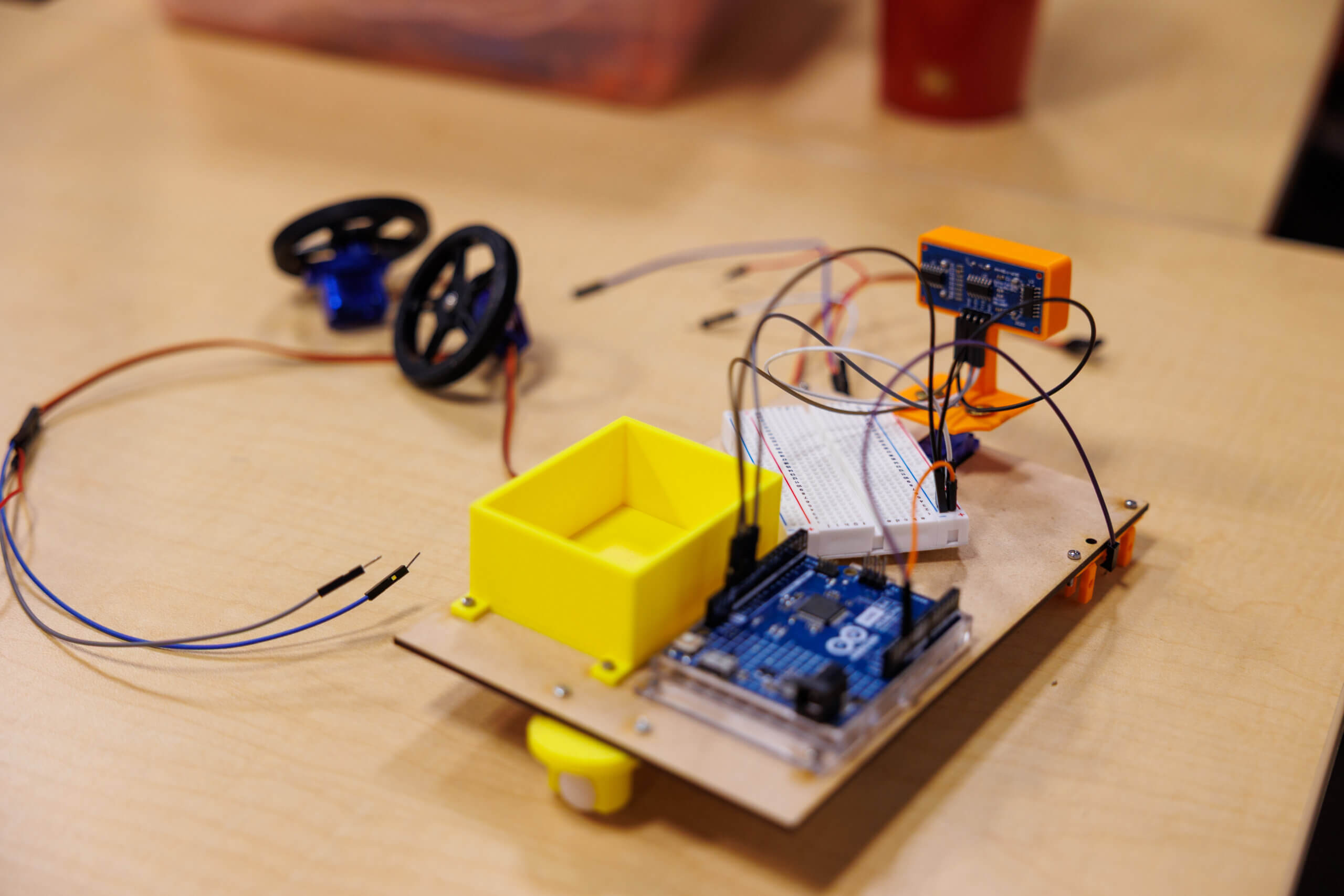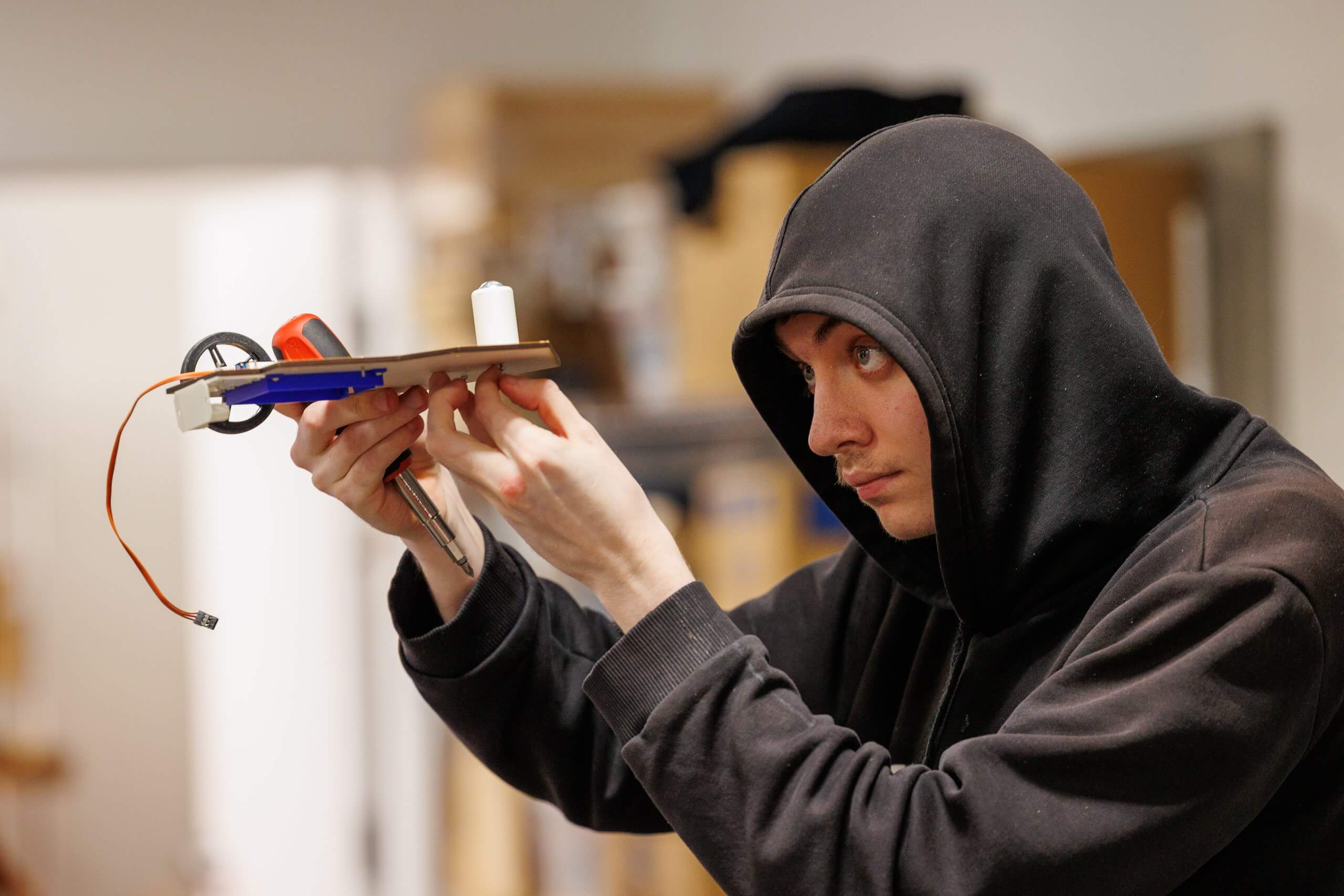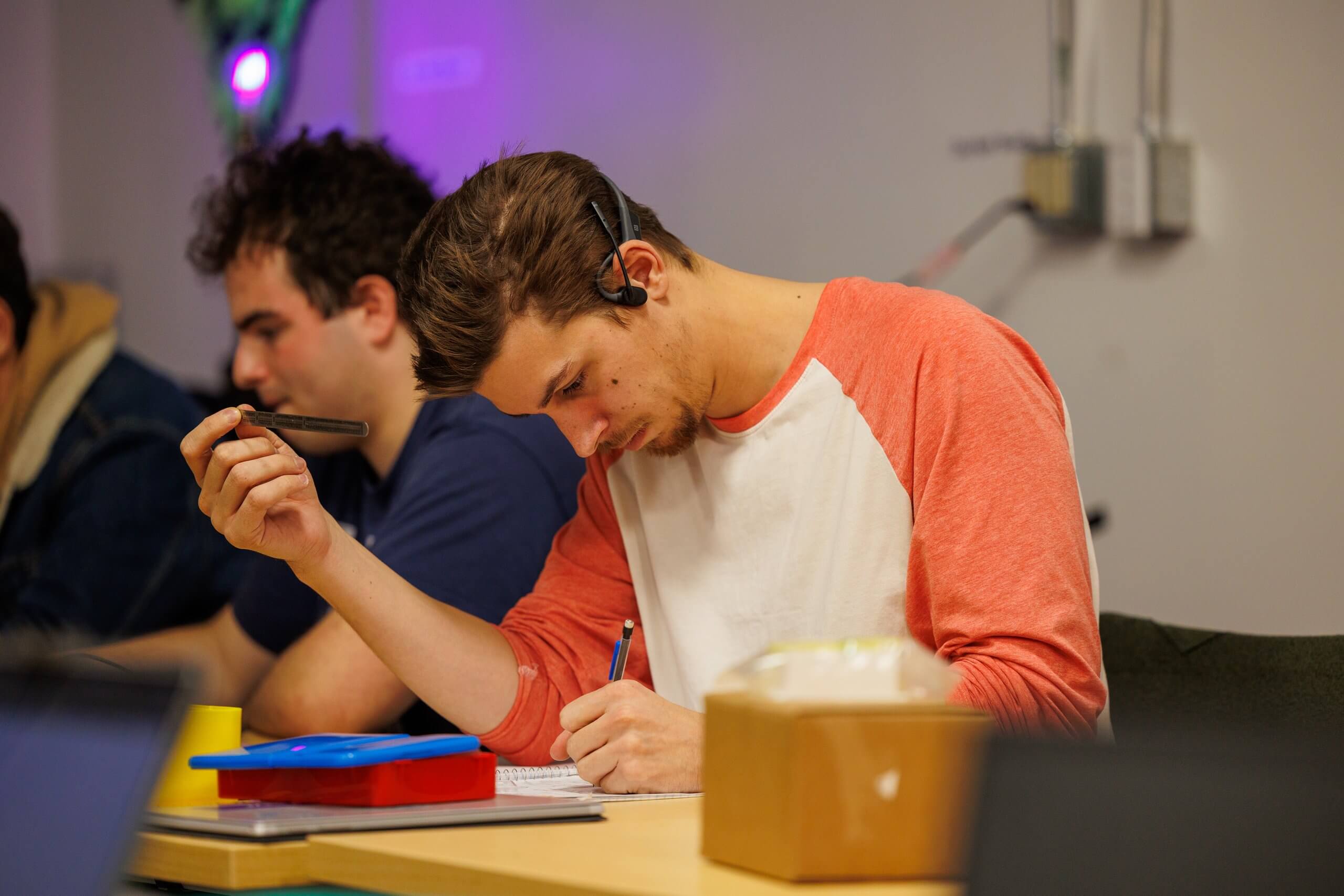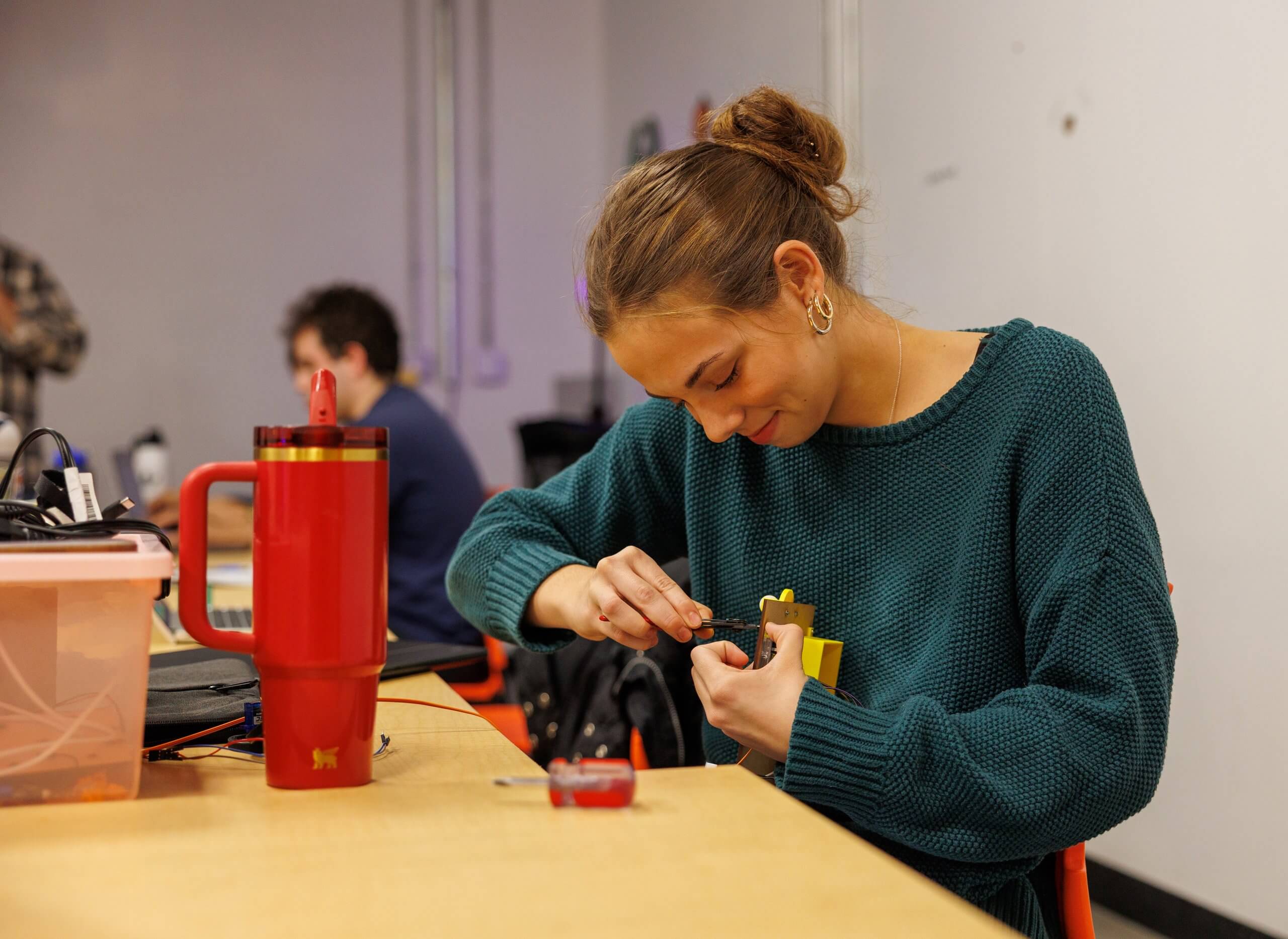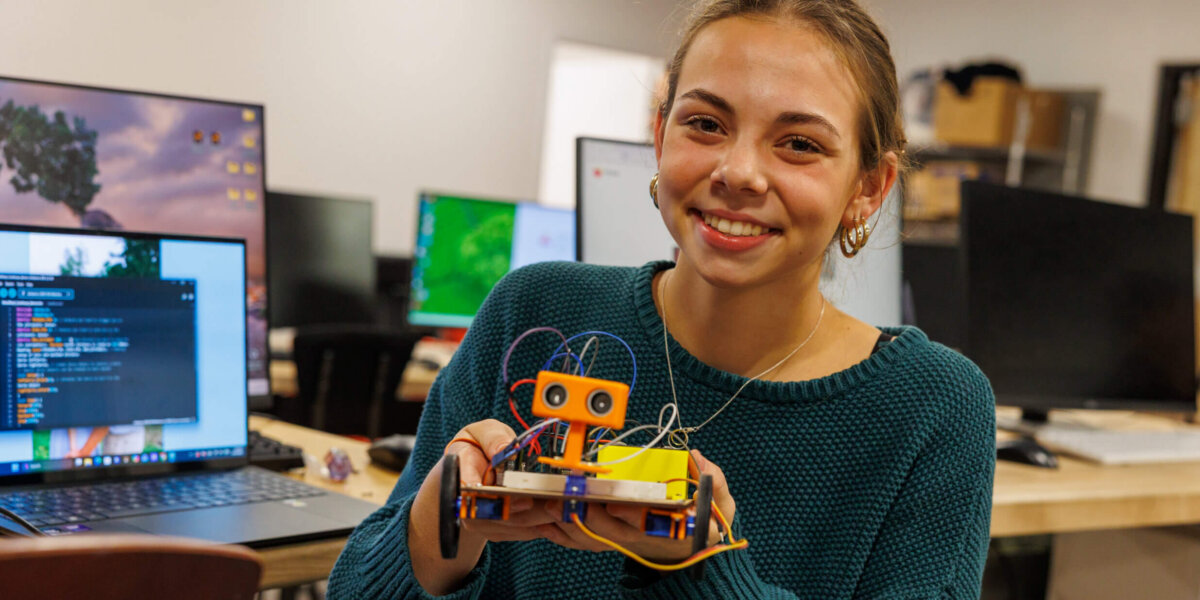
“I’m kind of a math nerd,” says Abi Montagne, as she lovingly fusses with a homemade robot. “I like to solve problems. That’s just how my brain works. I like having to find a solution to a complicated problem.”
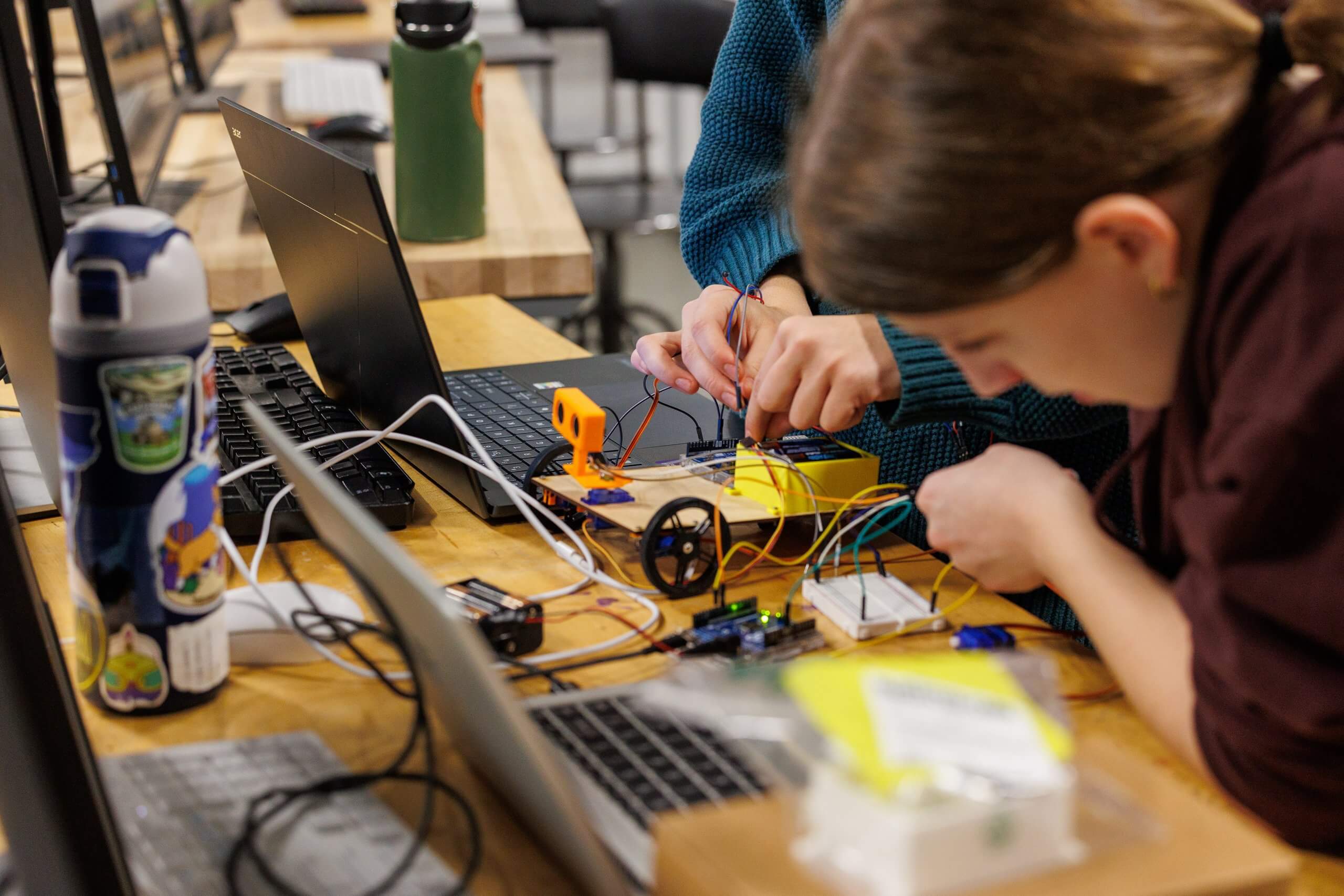
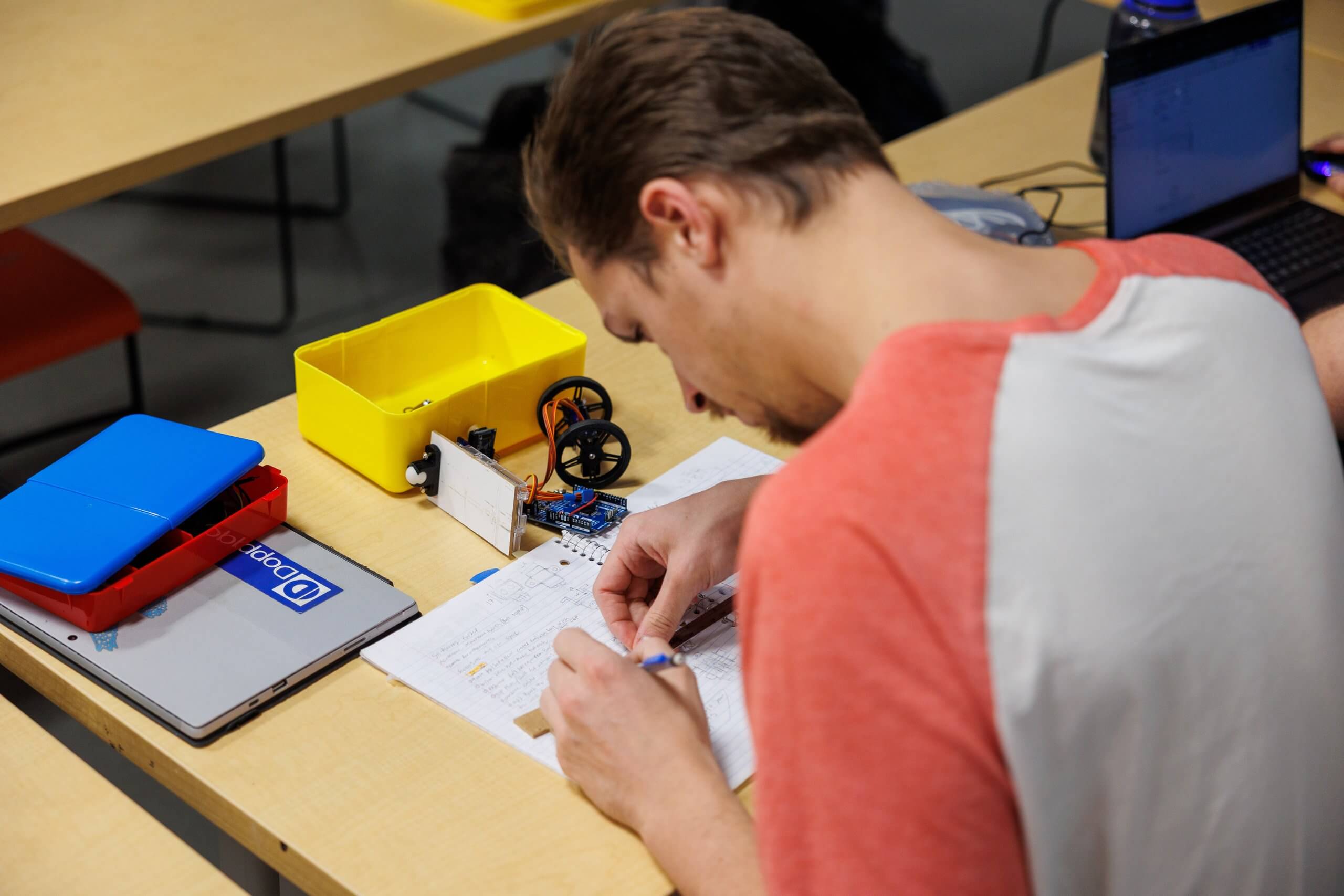
Abi is an Early College student at CCV, meaning she’s earning a free year of college credits that also count toward graduation from high school. She was working on her robot during a recent Monday evening meeting of CCV’s Fundamentals of Engineering & Design class, which takes place at the Generator Makerspace in Burlington.
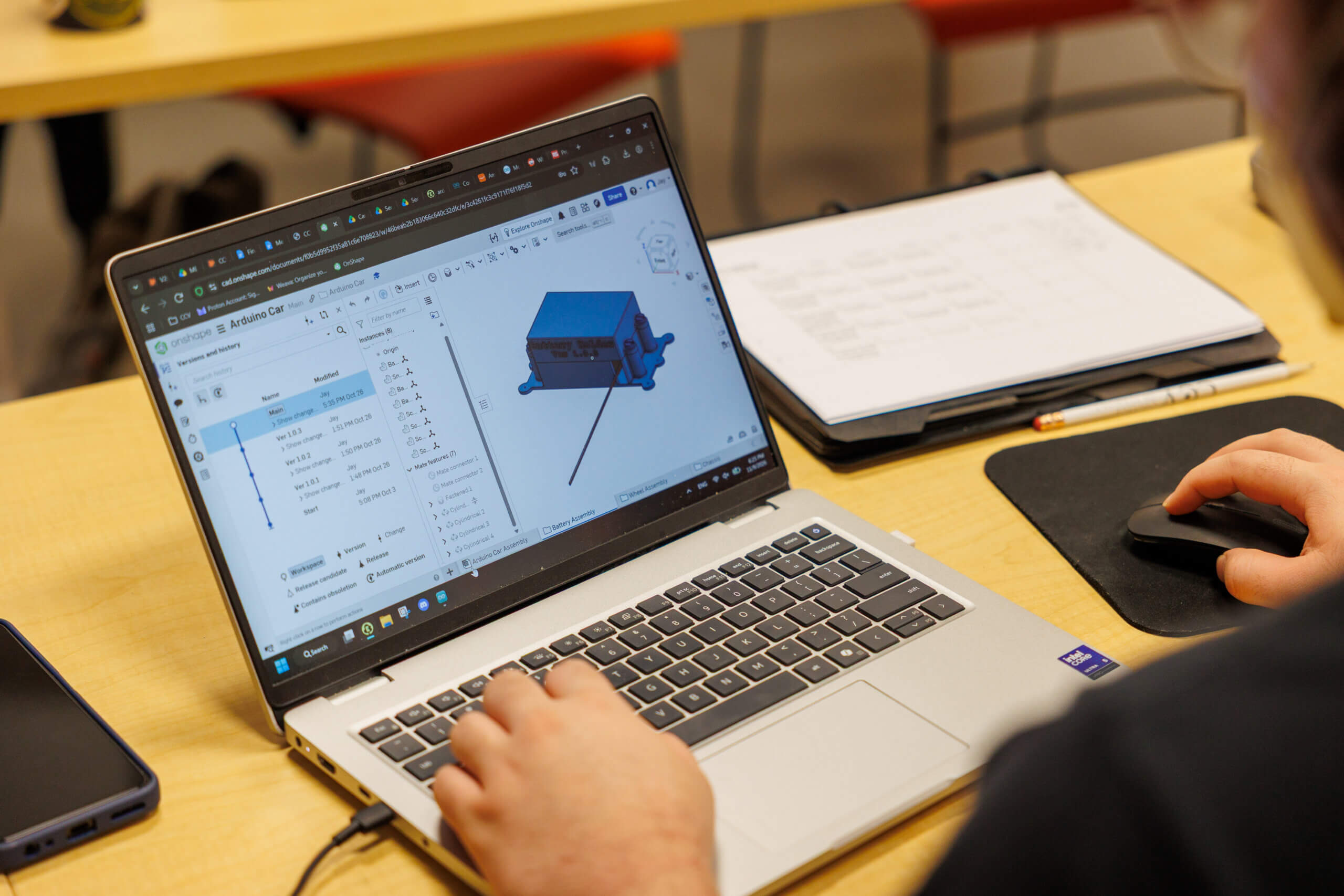
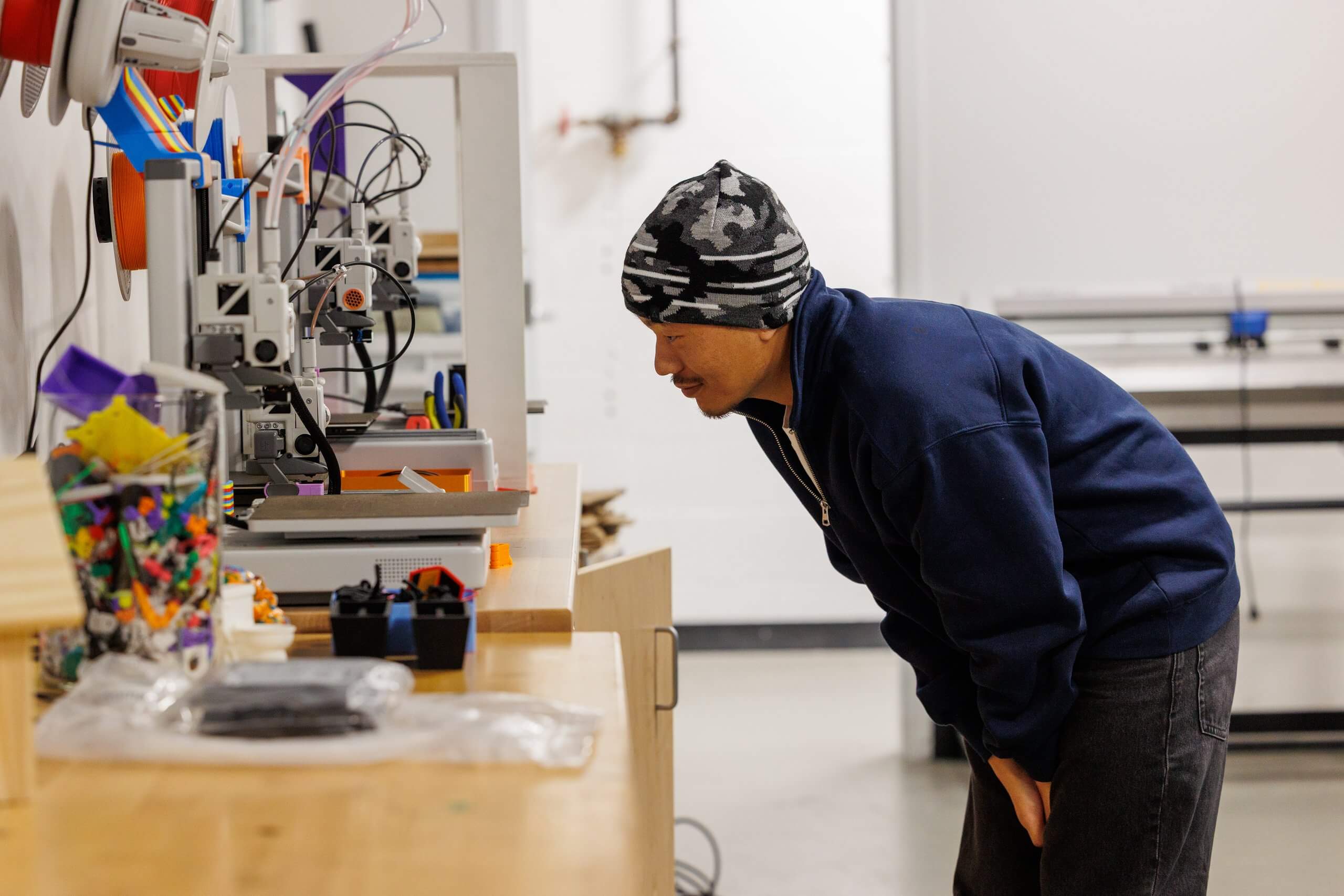
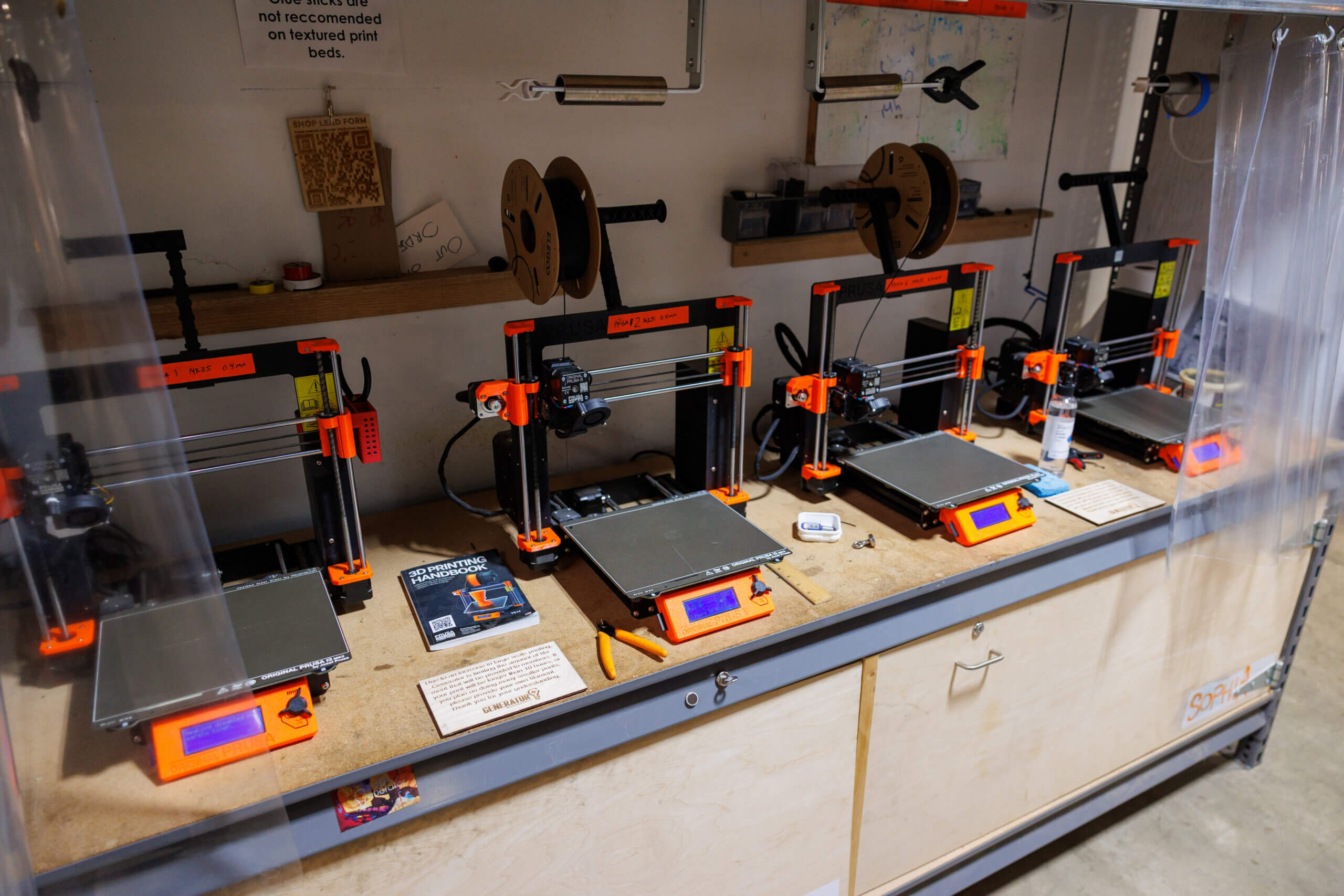
“This class is fun because I want to go into engineering but my high school didn’t have a lot of options,” Abi says of Fundamentals. “Here, we get to use the 3D printers, we’re learning how to code, and we even got to learn how to use the laser cutter, which I thought was cool.” Tuition and fees for the class are covered by STRIVE, a U.S. National Science Foundation grant that aims to increase participation in science and technology-related academic programs, research, and workforce development statewide. And as part of the class, students are provided with a Generator membership, which gives them unlimited access to the space and its many resources outside of class time.

Veronica Newton is senior director of programs and partnerships at the Generator. She says the makerspace’s focus on access—to tools, technology, software, and a supportive network—complements CCV’s mission. “By partnering with CCV, it allows us to extend that access, and be able to connect the education component, and the hands-on, but also being able to connect it to workforce development.”
“This partnership is a beautiful example of what it looks like to tear down silos,” she said. “We really are making sure that we’re connecting industry, community, and education. It’s a phenomenal opportunity for the Generator but also students and educators.”
The partnership isn’t new; CCV has been working alongside the Generator for close to a decade. But over time, the opportunities for students have grown. The STRIVE grant is one example. Another is CCV’s Career Pathway Entry Program (CPEP), which allows job seekers as well as changers to explore careers and gain college credit. The program combines college classes, industry-recognized credentials, job shadows, and paid training.
This past spring, CCV students took courses at the Generator as part of a CPEP manufacturing pathway offered in partnership with BETA Technologies. The two-course sequence, through which students earn their Certified Production Technician certificate, a nationally recognized manufacturing credential, will be offered again in spring 2027. This time around, it’s free for students thanks to STRIVE.
“One of the primary goals of STRIVE is to create linkages between STEM-related community partners, employers, and educational pathways,” says Jarod Waite, associate academic dean at CCV. “To that end, hosting coursework and promoting CCV’s longstanding relationship with the Generator is a logical partnership to offer coursework within CCV’s manufacturing program.”
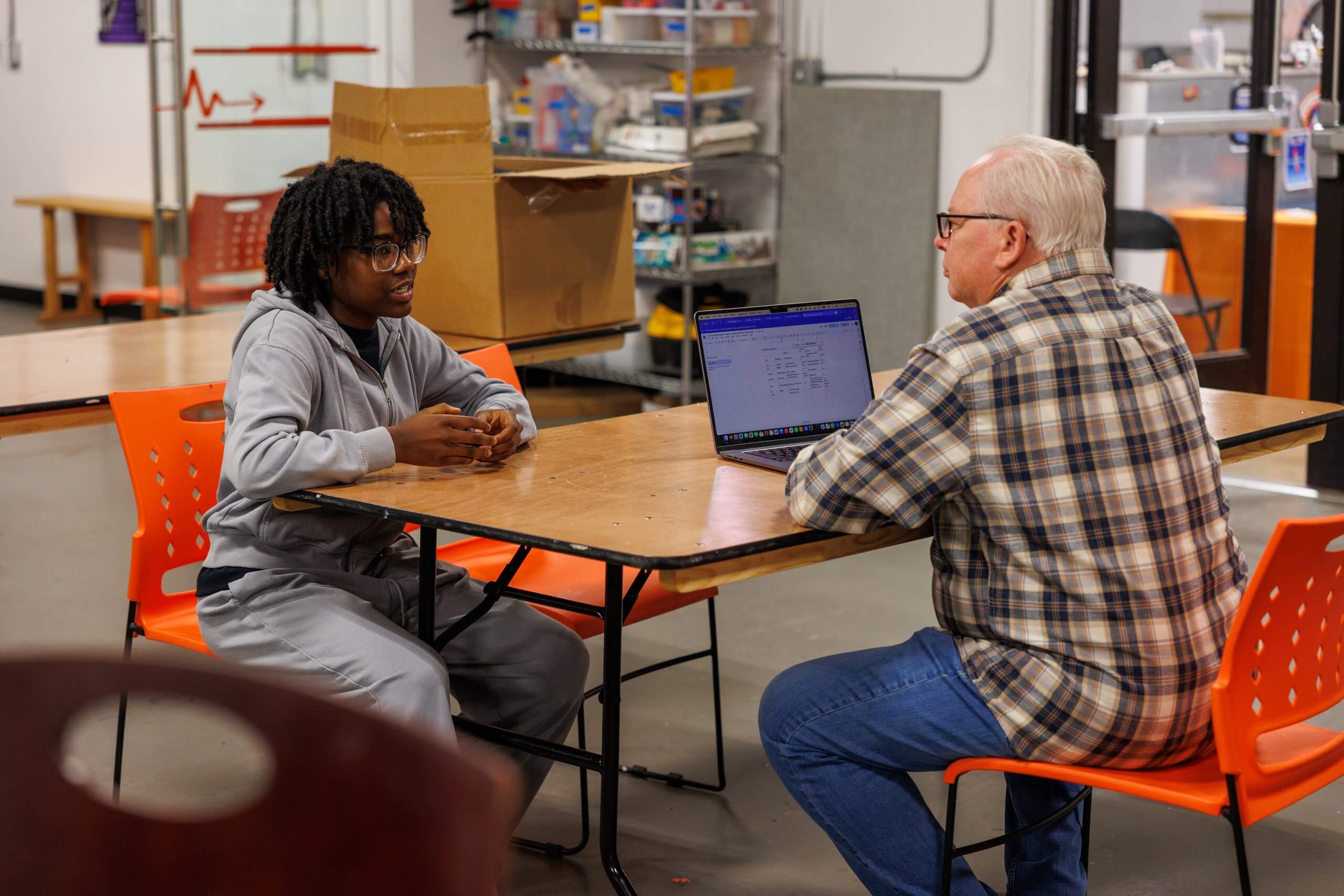
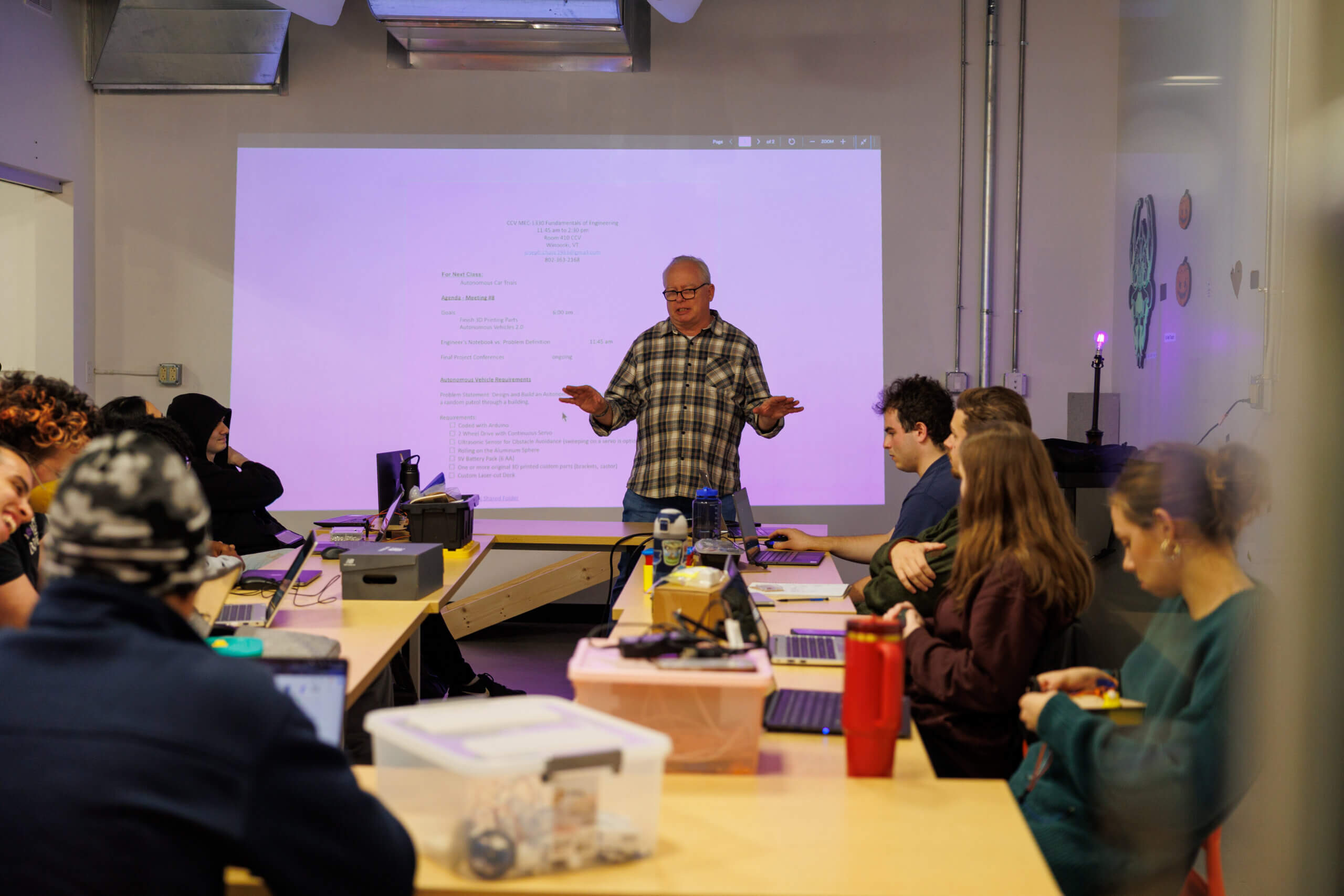
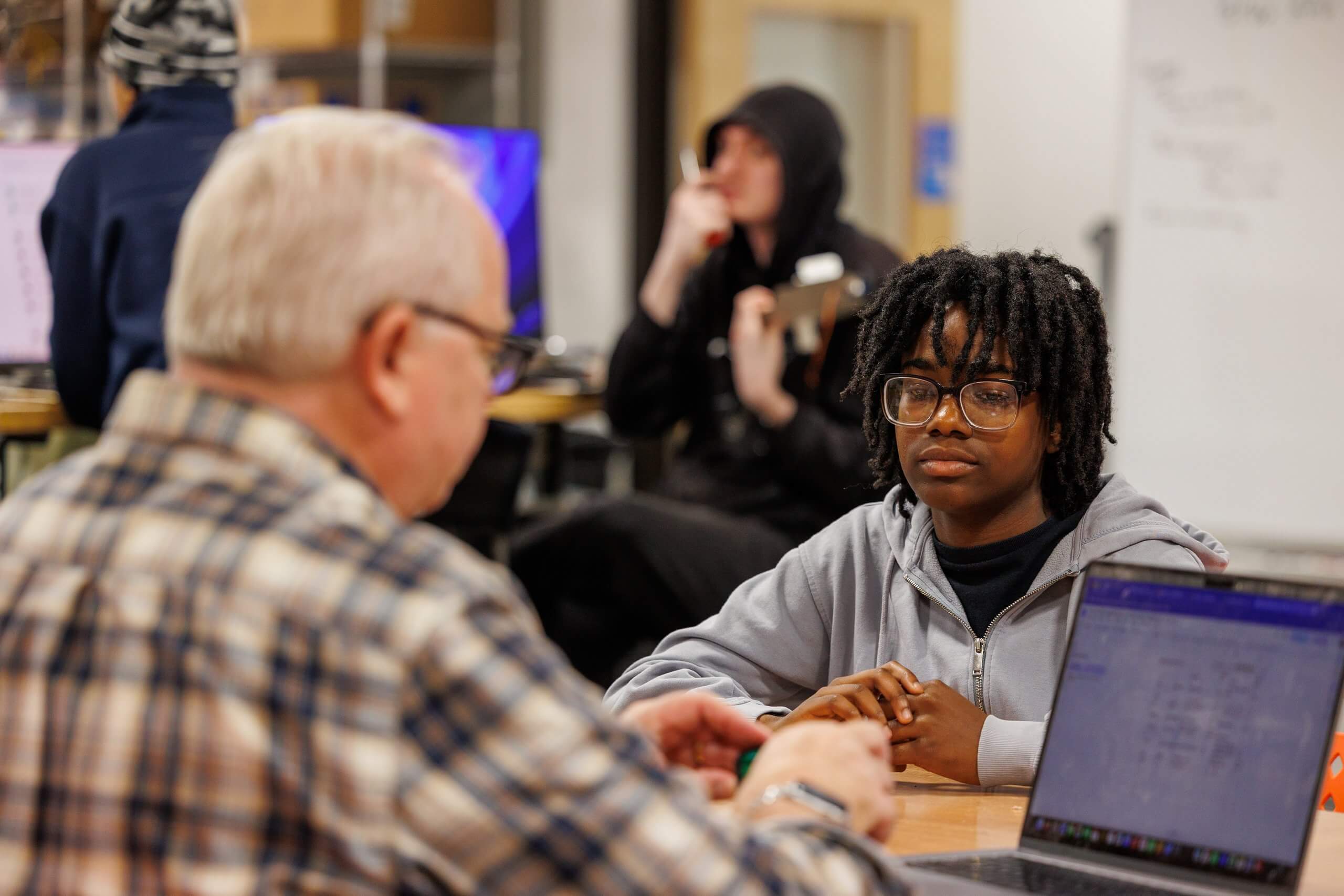
The Fundamentals instructor, Joe Chase, has been an educator for 35 years. A retired high school teacher, he’s passionate about helping students develop their interests. He says CCV students are often “trying to figure out ‘what am I good at?’ And in almost all settings, they’re interested in doing something that is beneficial to others.”
During Monday night’s class, Chase was checking in one-on-one with students about their final projects, “trying to come up with ideas to help each other…trying to identify problems that are affecting other people. That’s really the spirit of engineering.”
Montagne, the Early College student, lives on a small dairy farm in Northwest Vermont. For her final project, she’s hoping to find a solution to a problem that has to do with the farm’s robotic milker: “the cows will walk into the robot when they don’t need to be milked because they know the robot will give them grain. So the cow will sit there and none of the other cows can come in. So I was thinking of making a device that would slowly come out and push the cow out of the robot,” Abi says with a laugh, “because my eight-year-old brother really gets annoyed when he has to go down to the barn to kick the cow out.”
Chase was quick to point out the role that manufacturing plays in Vermont’s economy. Surprisingly, the state’s top export isn’t an agricultural product—it’s semiconductors. So encouraging students interested in STEM, and supporting them with grants, hands-on learning, and access to communities like the one at Generator, are all part of creating viable pathways to a promising future in Vermont.
“That’s why I’m really excited to work here at CCV, to work with these [students], and to help them understand that these connections exist.”
To learn more about the STRIVE grant and spring 2027 opportunities, visit ccv.edu/strive.