“After high school I didn’t really know what to do. I didn’t have a goal in mind, so that led to doing things I shouldn’t have, which led to trouble,” said Badal.
“I was being reckless and I got into the wrong crowd…[when] I look back I kind of get sad because I wasted so many years just doing dumb stuff,” said Keith.
“I dropped out of high school, and lost over a decade to alcoholism,” said Tim.
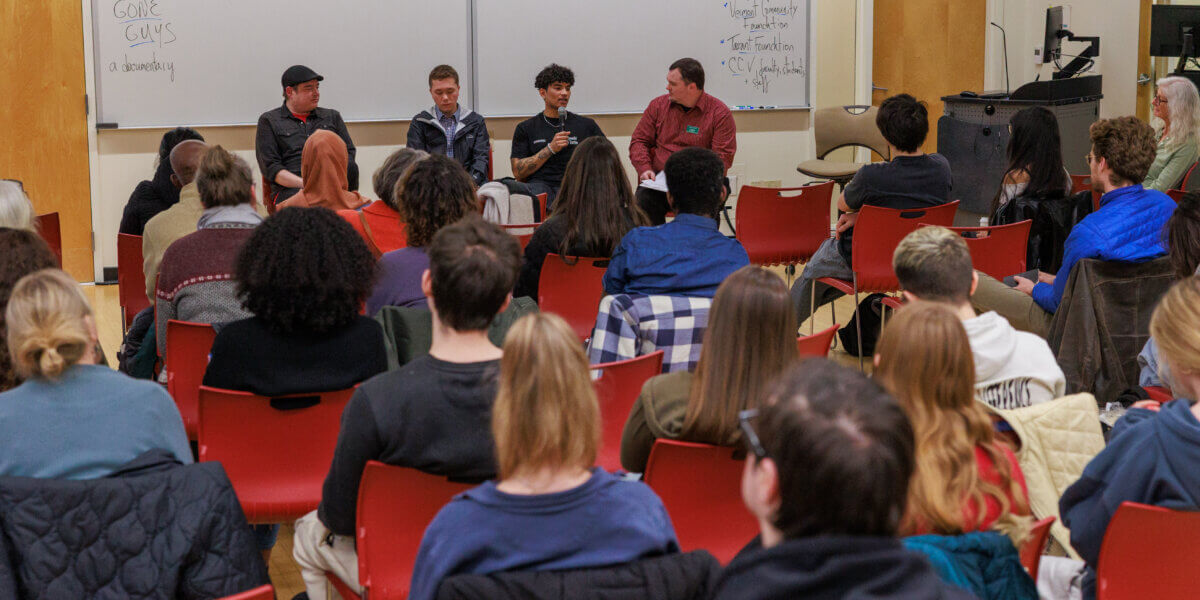
Badal, Keith, and Tim spoke last Thursday evening during a panel discussion following a screening of the new documentary Gone Guys. CCV-Winooski’s Janice Couture Room was packed with students, faculty, staff, families, and community members. Some had seen the film before and wanted their students to watch. Some brought along their husbands and sons. Some represented partner organizations like Vermont Adult Learning.
Set and produced in Vermont, Gone Guys explores a “quiet crisis” in our communities: the increasing disengagement and isolation of boys and young men. The film draws on the influential work of Richard Reeves, Brookings Institute scholar and author of the 2022 book Of Boys and Men, which illuminates these challenges through powerful data and compelling personal stories. Reeves is careful to note that this is not a zero-sum game: doing more for boys and men doesn’t mean doing less for women and girls.
The film was conceptualized more than two years ago by the Tarrant Foundation, who convened the conversation about these issues alongside CCV, UVM, and the Vermont Community Foundation. The Tarrant Foundation hosted Reeves for an April 2024 visit to Vermont in which he gave a keynote at UVM and joined a panel of educators and business leaders at CCV-Winooski. Gone Guys features clips from these early conversations. It was released last year and has been shown in dozens of towns across Vermont and beyond as more educators, mentors, families, and communities become interested.
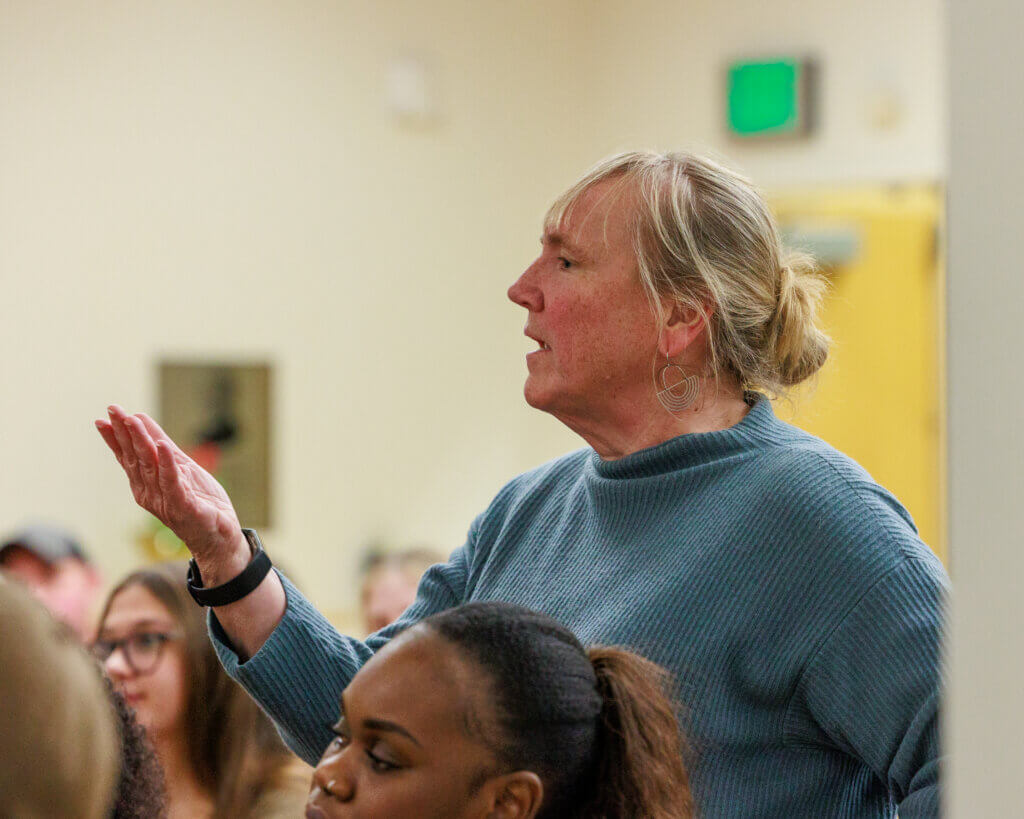
Faculty member Laurie Berryman brought her entire Intro to Psychology class to Thursday’s screening. “I have a long perspective on the demise of men in the workplace, men’s mental health,” she said. She’d seen the film before and wanted her students, most of whom are male—atypical for Intro to Psych, she noted—to “recognize that we have a crisis in men’s mental health.” Indeed, among the most haunting statistics in the film is the fact that men are four times more likely than women to die by suicide, and ten percentage points less likely than women to access mental health care.
Berryman hopes to normalize mental health challenges so that men don’t feel stigmatized for seeking support. How? “By talking about it.” So that is just what four men did in Thursday’s panel.
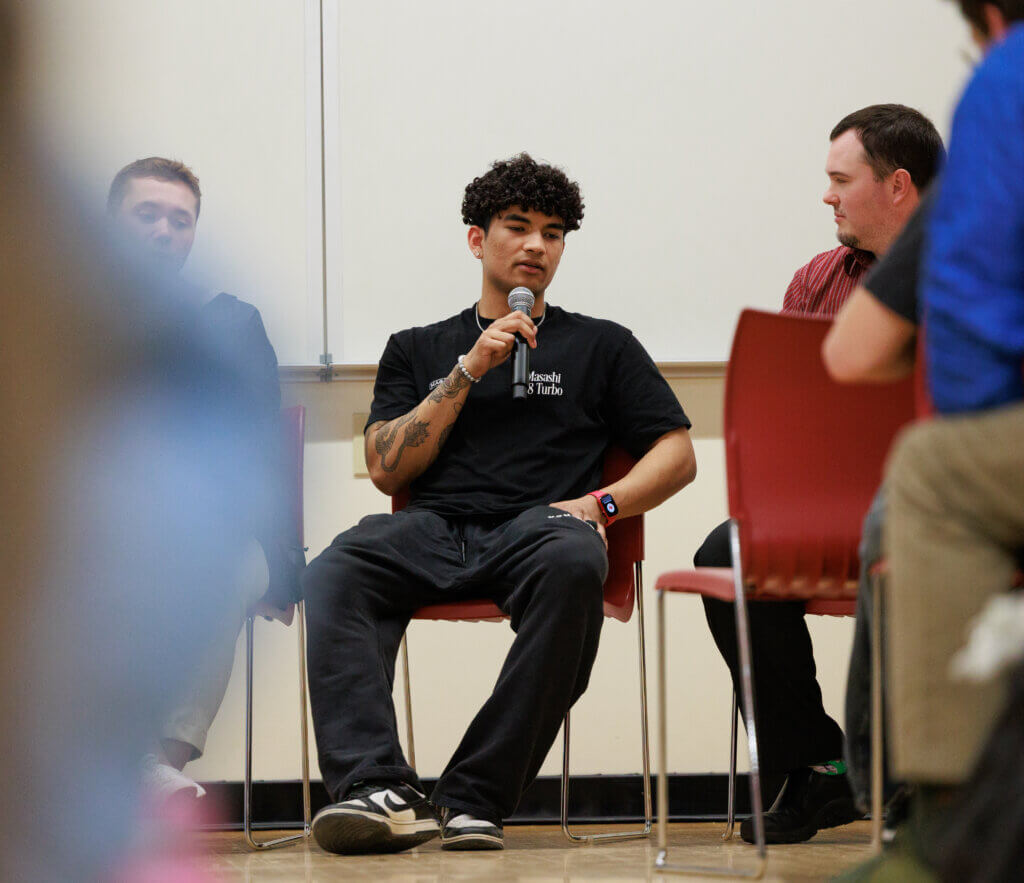
Badal is nearly done with his associate degree in business. He said he got to a point where he could either go back to school or go to jail, and he chose CCV. School is different now, he said. “When you’re coming from high school, when you’re required to go to class you have no interest in, you’re not gonna really pay attention to it. In college where you have a choice, that really helps. You’re doing something you’re interested in.” At CCV, between his advisor and his instructors, “there’s always going to be someone there that’s going to help you out.”
Tim is working on a degree in behavioral science. He shared that he experienced homelessness at the beginning of the pandemic, and “now I have stable housing, but the environment is toxic.” Among the 68 other units there are drugs, theft, and malaise. Tim found CCV and found out he could attend for free, and now is “surrounding myself with people who want to make themselves better and contribute and who are just positive…just being in this environment with my peers is just really encouraging.” Tim has also served as a peer mentor in the Student Resource Center, connecting classmates to community resources.
Keith echoed the importance of being in a healthy environment at CCV. “Being surrounded by people who support you as a person, and learning through other people…that kind of lit something in me. It took me a while to come to school; I just wanted something more for myself, and so that’s just what keeps me going and motivated, just being around supportive people who bring out the best in you.”
CCV Financial Aid Director Ryan Dulude moderated the panel. The last question he posed was borrowed from a moment in the film when Janette Bombardier, COO of Chroma Technology, asks “what can you do tomorrow?”
“Definitely give yourself grace,” said Tim. “But kind of ‘why wait ‘til tomorrow? Everyone’s heard that expression ‘the best time to plant a tree was twenty years ago, but the second-best time is today.’ And so just being proactive. When you see someone struggling, say something to them. Offer them some comfort and support. Even if they don’t say thank you, it may change their life.”
To learn more about the film, visit goneguysfilm.com.